Winter Driving Advice for Drivers
As winter approaches and temperatures drop, road conditions can change quickly. With snow and ice forecast in parts of the UK, it’s important that all drivers are prepared and confident before heading out.
The guidance below, based on advice from Logistics UK, is designed to help you stay safe when driving in snow and icy conditions. Please take a moment to read it carefully before your shift.
Planning & Preparation
Allow extra time for your journey and check weather and travel updates before setting off. Conditions can change rapidly, so keep up to date throughout the day via local radio or by checking in with base regarding route changes or closures.
Before moving off, make sure your vehicle is completely clear of ice and snow, particularly the windscreen and mirrors, to ensure full visibility.
In snowy or freezing conditions, drivers should carry suitable cab equipment including warm clothing and a blanket, food and a hot drink, a torch, a mobile phone and charger, a road atlas, sunglasses for snow glare, a shovel, and strong sacks that can be placed under drive wheels if the vehicle becomes stuck.
Driving in Snow & Ice
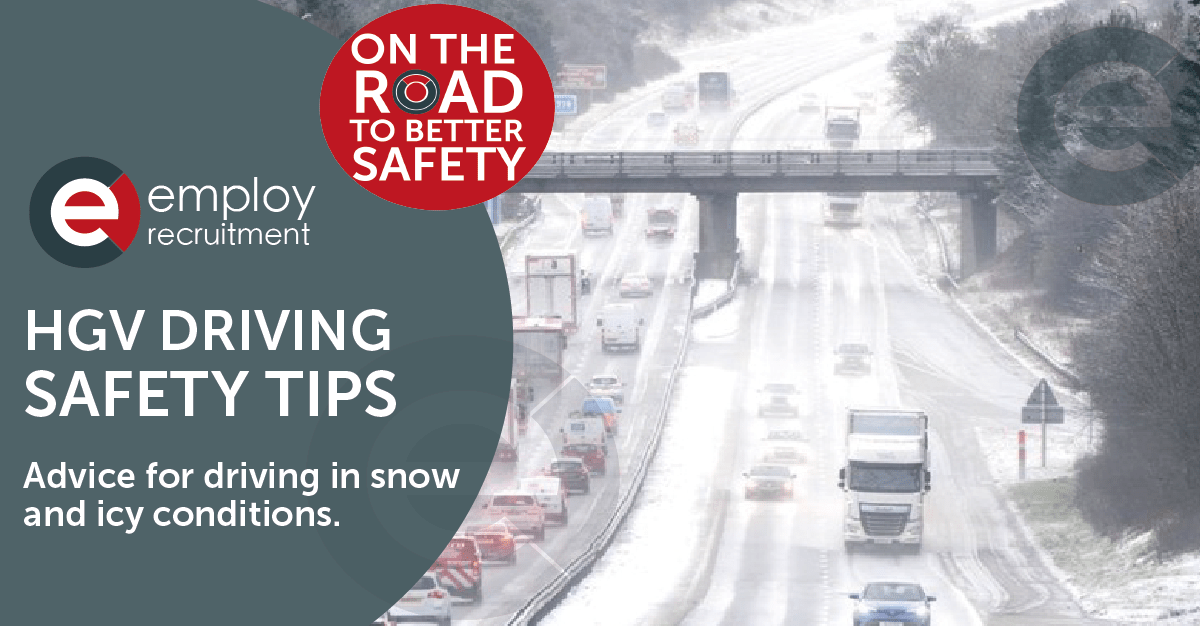
Adjust your driving to the conditions by reducing speed and significantly increasing your distance from other vehicles. On icy roads, stopping distances can be up to ten times longer than normal. Be aware that other drivers may struggle, even if your own vehicle feels stable.
All braking, steering and acceleration should be smooth and controlled. Brake gently and earlier than usual, particularly in articulated vehicles or when towing. Sudden movements greatly increase the risk of losing traction.
Falling snow can dramatically reduce visibility. Use dipped headlights, slow down, and take extra care at junctions where road markings and signs may be obscured.
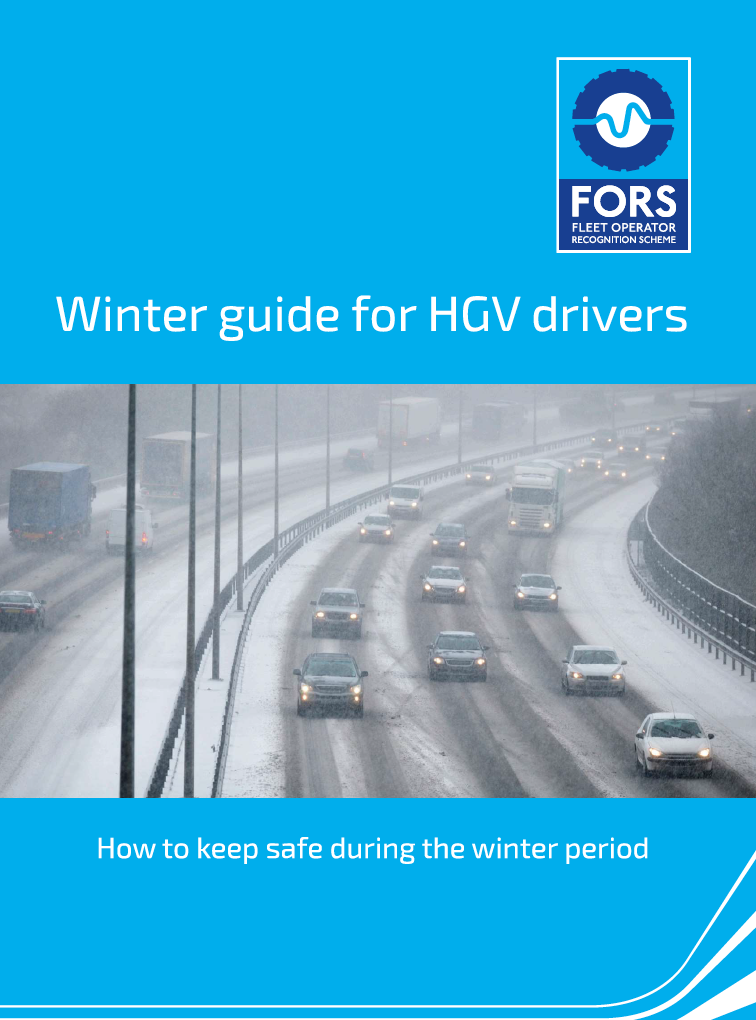
Click on the Winter Guide image to download.
Traction, Night Driving & Recovery
During prolonged snowfall, snow chains or snow socks fitted to driven wheels can be helpful where appropriate. Never overtake a snowplough or gritting vehicle unless you are certain the road ahead is clear and conditions allow it to be done safely.
At night, watch for falling temperatures. If the steering begins to feel light, you may be driving on ice. Ease your speed down gradually as soon as it is safe to do so.
If your vehicle becomes stuck in deep snow, engage the diff-lock if fitted to regain traction, then disengage it once moving and before turning. Alternatively, use the highest gear possible and gently alternate between forward and reverse gears to regain movement. Avoid continuous revving in low gears, as this can dig wheels into deeper ruts.
When using independent retarders on downhill stretches in snow, take extra care. Retarders can cause rear wheels to lock, although some systems are managed by ABS to reduce this risk.
Extra Precautions
During periods of cold weather, drivers are asked to carry night-out gear as a precaution. If conditions worsen while you are out on shift and it becomes unsafe to continue, this ensures you have essential provisions with you.
Safety must always come first. If conditions deteriorate to the point where you feel it is unsafe to drive, stop and seek guidance.